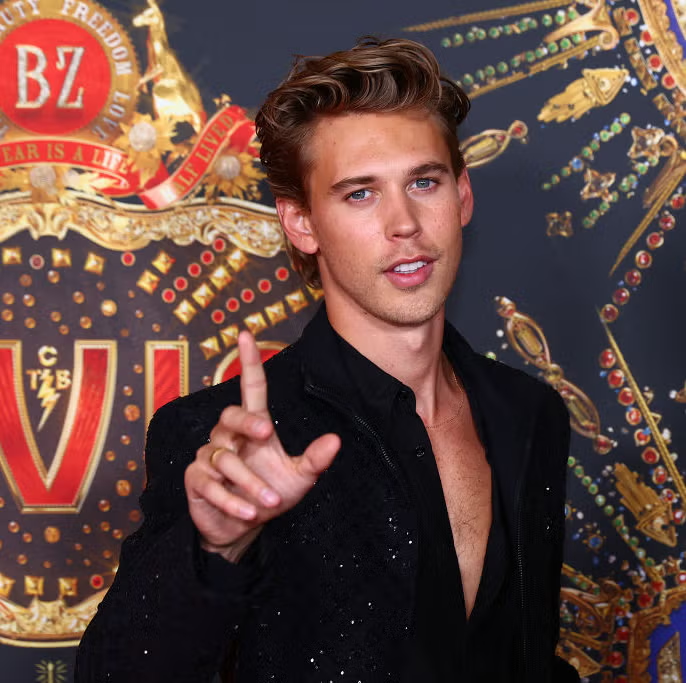
Just when you thought it was safe to hear Austin Butler speak in his natural register, Baz Luhrmann has pulled the ultimate “Prestige Trap.” The announcement of Epic Elvis, a 2026 concert film event, has sent shockwaves through Hollywood—not because of the music, but because of what it means for Butler’s sanity.
Insiders are whispering that the “Elvis fever” is being artificially resuscitated by a studio desperate for a guaranteed hit, effectively forcing Butler back into the rhinestones just as he was attempting to pivot into “Villain Era” roles like Lance Armstrong.
Sources close to the project suggest that Luhrmann has been sitting on “vault-level” footage that blends Butler’s 2022 performance with hauntingly real digital recreations of the 1970s Vegas era. But the “Insider” buzz is deeply cynical: is this a celebration of Elvis, or a refusal to let Austin Butler move on? There is a bitter truth emerging that Butler is “contractually haunted,” unable to escape the shadow of a dead man because the industry refuses to see him as anyone else.
Critics are already speculating that this “resurrection” is a sign of creative bankruptcy, using 2026 AI and editing wizardry to polish a legacy that should have been left in peace.
The real tension lies in Butler’s mental state. After famously needing a dialect coach to “find his own voice” again, being thrust back into the Vegas spotlight for a global cinema event is a psychological minefield. The “Insider” fear is that Epic Elvis will turn Butler into a permanent caricature—a “Forever Elvis” who can never truly headline an original film again.
As the trailers for the concert film prepare to drop, the question isn’t whether the songs will sound good; it’s whether there’s anything left of Austin Butler behind the “Suspicious Minds” of the Hollywood machine.